Exhibit A |
|
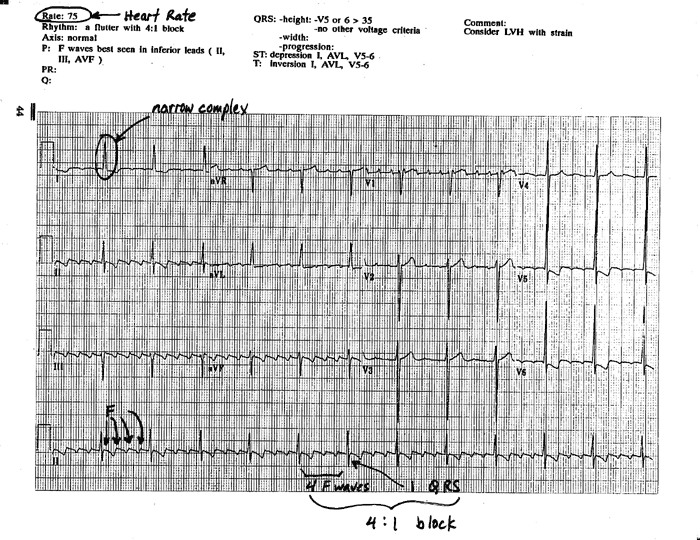
Atrial Flutter 4/1 block The first thing is to notice the rate (75 bts/min) and that the QRS complexes are narrow (less than 3 small boxes). Second thing would be to notice that the rate is regular (the R-R interval is consistent throughout). When you see narrow complexes and regular rhythm, think of sinus tachycardia, atrial flutter or Paroxysmal Supraventricular Tachycardia (PSVT). The next obvious thing to notice is the presence of "F" waves or flutter waves in each lead ( best seen in lead II). You would then notice the ratio of F waves to QRS waves which in this example is 4 / 1. F waves are indicative of Atrial Flutter and the 4/1 ratio means that there is a 4 to 1 block. In other words the AV node is protecting the ventricle from the numerous action potentials arriving from the tachcardic atria. Only one action potential (for every four arriving) is allowed through to the ventricle. Compare to Normal ECG |
 |
 Back to List
of Cases