Exhibit B |
|
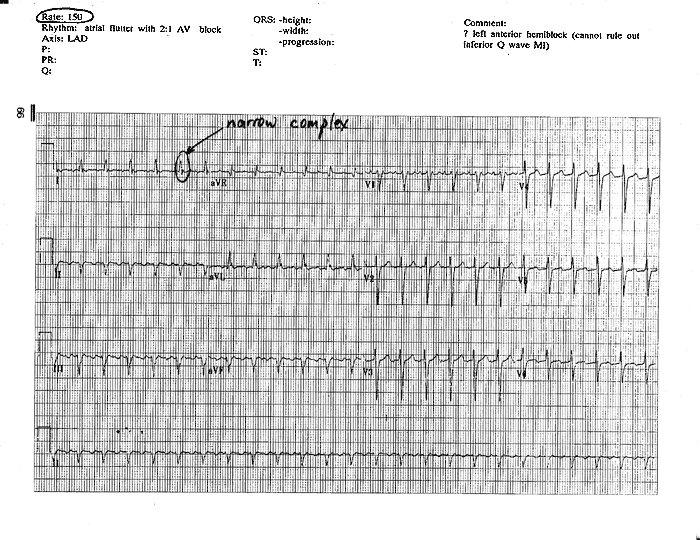
Atrial Flutter 2/1 block The first thing is to notice is the rate (150 bts/min) and that the QRS complexes are narrow (similar to the example above). Second thing would be to notice that the rate is regular (the R-R interval is consistent throughout). When you see narrow complexes, regular rhythm, and a rate of 150 think Atrial Flutter. In atrial flutter the atria are beating at 300 bts/min but the heart rate of 150 indicates the presence of a 2/1 block. At these rates you can’t always see F waves (and in this example you don’t). Based only on the ECG we would speculate it’s Atrial Flutter and the follow up would be to: use vagal maneuvers (e.g. carotid sinus massage or valsalva maneuver), or administration of adenosine in order to slow the ventricular rate and bring out the F waves. In this patient ongoing treatment would be needed to control their ventricular rate using AV node blocking drugs (e.g.verapamil or beta blockers). Compare to Normal ECG |
 |
 Back to List
of Cases